

What to Do With a Lifetime of Belongings When Downsizing
Downsizing your home sounds simple in theory: live with less, clear the clutter, move into a smaller space, or create a home that feels more manageable for the next chapter of life.
But emotionally, downsizing can feel much heavier than people expect.
Unless you have lived through it yourself—or walked alongside someone who has—you may not realize how emotional the process can become. Especially if you have lived in the same home for decades, raised a family there, celebrated milestones, grieved losses, and moved through many seasons of life within those walls.
Every room can hold memories. Every drawer can tell a story.
For many people, the goal of downsizing is not simply “getting rid of stuff.” The deeper goal is often to lighten the physical and emotional weight of managing a lifetime of belongings.
Maybe the goal is to:
Age in place more comfortably and safely
Reduce clutter and create a more peaceful home
Move into a smaller, more manageable space
Simplify daily life
Reduce what loved ones may eventually need to sort through later
At its heart, downsizing is about creating more ease.
But the process of getting there can feel overwhelming.
Why Downsizing Feels So Emotional
What makes downsizing difficult is not usually the furniture, dishes, or boxes themselves.
It is what they represent.
A lifetime of belongings often carries memories, identity, family history, and emotional attachment. Letting go of things can sometimes feel like letting go of pieces of yourself, your story, or your legacy.
This is especially true when sorting through:
Family heirlooms
Old photographs
Children’s belongings
Letters and cards
Collections gathered over decades
Items connected to loved ones who have passed
Even when downsizing is a positive choice, decision fatigue and emotional overwhelm can quickly take hold.
That is why giving yourself time and compassion throughout the process matters.
Start With the Easier Decisions First
If you are beginning the downsizing process, start small.
You do not have to tackle the entire house in one weekend.
Begin with the obvious things first:
Broken or outdated items
Duplicates
Things you no longer use
Items without strong emotional attachment
Starting with easier decisions helps build momentum and confidence before moving into more sentimental categories.
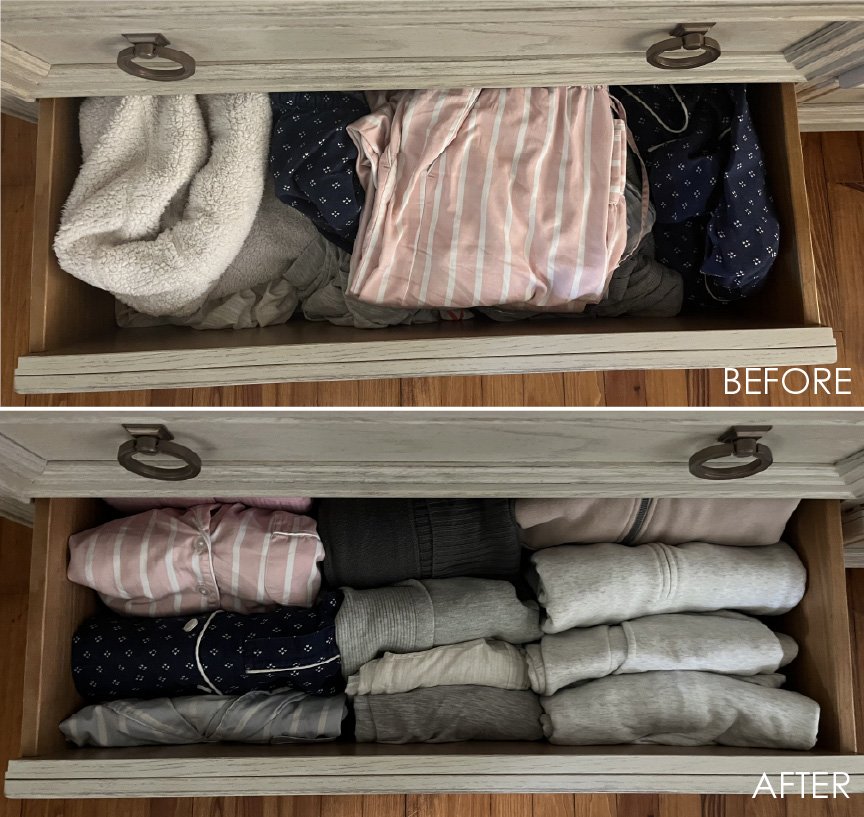
Even one drawer, one shelf, or one closet is a meaningful start.
What to Do With Sentimental Items
One of the hardest parts of downsizing is deciding what to do with sentimental belongings.
When you reach those emotionally heavier items, give yourself permission to slow down.
Talk about the item. Recall the memory connected to it. Share the story with someone you trust. Write the memory down if you want to. Take a photograph of the item before letting it go.
Honoring the memory matters.
And it is important to remember: downsizing does not mean getting rid of everything.
There is value in holding onto meaningful belongings that still bring comfort, joy, or connection. The goal is not emptiness. The goal is intentionality.
Create a “Legacy Box”
Some experts suggest keeping only a handful of sentimental items. For many people, that can feel unrealistic—or even painful.
Instead, consider creating a “Legacy Box” or two.
Choose boxes no larger than a standard filing box and allow yourself to fill them only with the items that feel most meaningful. The finite space creates gentle boundaries while still preserving the memories and keepsakes that matter most.
Inside might be:
Old photographs
Letters and cards
Family recipes
Small heirlooms
Childhood mementos
Meaningful keepsakes that tell your story
A Legacy Box allows you to preserve the emotional meaning without feeling consumed by the physical volume of belongings.
You Do Not Have to Go Through It Alone
Downsizing can feel isolating, especially when you are carrying decades of memories and decisions by yourself.
Many people find it helpful to have support during the process—someone to talk through decisions with and help manage the emotional overwhelm that can come with decluttering a lifetime of belongings.
Sometimes family members can help. Other times, involving family can add another layer of emotion or pressure.
Bringing in someone impartial—such as a professional organizer, decluttering specialist, or even a trusted friend—can make the process feel lighter emotionally. An organizer can also help with the practical side of downsizing, including:
Sorting and organizing
Donation coordination
Recycling and discarding
Creating manageable systems
Breaking the process into smaller, less overwhelming steps
Downsizing Is About More Than Stuff
Downsizing is not simply about removing things from a home.
It is about making space for the next chapter of life with greater clarity, ease, and peace.
The process can be emotional. It can be exhausting at times. But it can also feel freeing.
You are not erasing a life by letting go of belongings. The memories, experiences, and impact of your life do not live solely within the objects themselves.
They live within you and the people whose lives you touched along the way.
If you or a loved one are beginning the downsizing process and need compassionate support, The Well Nest Home helps individuals and families declutter, organize, and create more manageable living spaces with care, understanding, and without judgment.
Photo credit: cottonbro studio
Where to Start When You’re Overwhelmed by Clutter
Feeling overwhelmed by clutter in your home? Believe me, you are not alone. Whether you are preparing for summer activities, downsizing, aging in place, or simply trying to create a calmer and more functional home, clutter can quickly become mentally and emotionally exhausting.
As summer approaches, many of us are spending more time outside the home—or at least hoping to. Maybe it is weekly trips to the farmers’ market, taking up kayaking, afternoons at the local pool, or simply trying to be outside and active during these warmer months.
But even as our attention shifts outward, our homes still need to function for us.
We need to be able to quickly grab the reusable bag for the farmers’ market, find the water shoes for kayaking, or easily locate towels and sunscreen before heading to the pool.
And then it happens.
Before you can leave the house, you find yourself asking:
“Where are all of these things I have not needed for the past several months while I was hibernating?”
You head to the closet where you think everything might be stored, only to discover it has quietly become the holding ground for countless things over the last several months. Suddenly, the outing you were excited about no longer feels exciting because you are now standing face-to-face with overwhelm.
The easiest thing to do is close the door and pretend it is not there, telling yourself:
I’ll deal with it some other time.
So you leave the house without the reusable bag, the water shoes, or the towel. You make do with alternatives, but you do not feel great because there is now a nagging thought in the back of your mind, and the question becomes:
When will I finally deal with it?
Why Clutter Feels So Overwhelming
There are many reasons clutter can feel emotionally overwhelming.
Sometimes it is the decision-making process itself. Sometimes it is guilt—perhaps guilt over spending money on something you never used, or guilt because an item was gifted to you by a friend or family member.
Here is a gentle reminder on that one: if you do not like it, it is 100% OK to let it go.
It was given to you. You said thank you. You are now allowed to choose what happens to it. If it is taking up valuable space and no longer serves you, it is perfectly acceptable to find it a new home.
Another common reason we hold onto clutter is the thought that we might need something someday. We keep things “just in case.”
Something to consider: if you have not needed it yet, you probably will not need it. And in the unlikely event that you do, you can deal with it then.
Decluttering can be incredibly freeing—not just physically, but mentally as well.
How to Start Decluttering When You Feel Overwhelmed
One of the hardest parts of decluttering is simply figuring out where to begin.
The thought of decluttering an entire home can feel massive, especially when the clutter is not confined to just one room or closet. The feeling of being flooded by the size of the task can quickly take over.
It is OK.
It can be manageable.
The key is to start small.
1. Start with One Small Space
Choose one small area:
A single drawer
One shelf
A small closet
You do not need to tackle everything at once.
Small wins create momentum.
2. Give Yourself a Time Limit
Set a manageable amount of time:
15 minutes
30 minutes
One hour
When decluttering feels overwhelming, shorter focused sessions are often more effective than trying to do everything in one day.
3. Empty the Space Completely
Take everything out of the space.
Wipe it down and give it a good clean. Starting fresh can feel surprisingly motivating and helps you reassess what truly belongs there.
4. Create Simple Decluttering Categories
As you go through your items, create designated piles:
Keep
Donate
Recycle
Relocate
Trash
Note: Trash is the last resort—try to reserve this for items that truly cannot be reused, donated, or recycled. The goal is to declutter as sustainably and responsibly as possible.
5. Remove Donation Items Immediately
For donation items, place them directly into bags or boxes and remove them from the space you are working on. We want them gone. Out of sight.
One helpful tip: if possible, place donation bags directly into your car so they are ready to be dropped off. Otherwise, those bags can easily sit in the corner of a room for days, weeks, or even months.
6. Create “Homes” for the Items You Keep
Once you are left only with the items you are keeping, begin sorting and categorizing them.
Creating designated homes for your belongings makes it easier to stay organized moving forward. When everything has a place, it becomes easier to put things away and easier to find them later.
Then, thoughtfully place everything back into the space.
And just like that—you have successfully decluttered one small area.
That small win creates momentum. Suddenly, the next drawer or closet does not feel quite as intimidating.
Give Yourself Grace During the Decluttering Process
Remember to be kind to yourself throughout this process.
There may be items that feel difficult to decide on in the moment. That is OK. Set them aside and give yourself a designated timeframe to revisit the decision later.
Nothing needs to be perfect.
The goal is not perfection—it is peace of mind.
Decluttering is transformative not only visually, but mentally and emotionally as well. Reducing physical clutter can create a sense of calm, clarity, and relief within your home and within yourself.
When to Hire a Professional Organizer or Decluttering Specialist
The donation process alone can feel overwhelming—deciding where items should go, how to donate responsibly, and coordinating drop-offs.
This is where a professional declutterer and organizer can be incredibly helpful. Having support and accountability can make the process feel far more manageable, especially during life transitions such as downsizing, moving, or preparing to age in place.
At The Well Nest Home, we help people work through the overwhelm of clutter so their homes can function better for everyday life, downsizing, or aging in place.
Frequently Asked Questions About Decluttering
Why does clutter feel so overwhelming?
Clutter can create mental fatigue, decision fatigue, stress, and anxiety. When our environments feel chaotic, it can become difficult to focus, relax, or feel at ease in our homes.
What is the best place to start decluttering?
Start with one small space, such as a drawer, shelf, or closet. Beginning small helps reduce overwhelm and builds momentum.
How long should I declutter each day?
Even 15–30 minutes can make a meaningful difference over time. Consistency is often more effective than trying to declutter an entire home in one weekend.
What should I do with items I feel guilty getting rid of?
Remind yourself that keeping an item out of guilt does not make your home more functional or peaceful. If something no longer serves you, it is OK to donate it or find it a new home.
Should I throw everything away when decluttering?
No. Whenever possible, try to donate, recycle, or responsibly rehome items before resorting to trash. Sustainable decluttering helps reduce waste while helping others.
Closet Reset
Closets… they have a way of quietly (and sometimes aggressively) getting out of hand.
Life is busy, you’re in a rush, and suddenly you’re in a full-blown clothing crisis—you have nothing to wear, nothing fits quite right, and somehow you’ve decided you hate everything you own.
Closets can unravel for all kinds of reasons—lack of time, lack of systems, or simply not having a true home for things. And when your closet feels chaotic, getting dressed becomes unnecessarily hard.
Bringing order to the chaos can help tamper any of those clothing crisis feelings, make getting dressed each day a little easier, and at the end of the day? Be able to put things back where they belong so that the next day when you open that closet there is another day with a sense of calm in that closet.
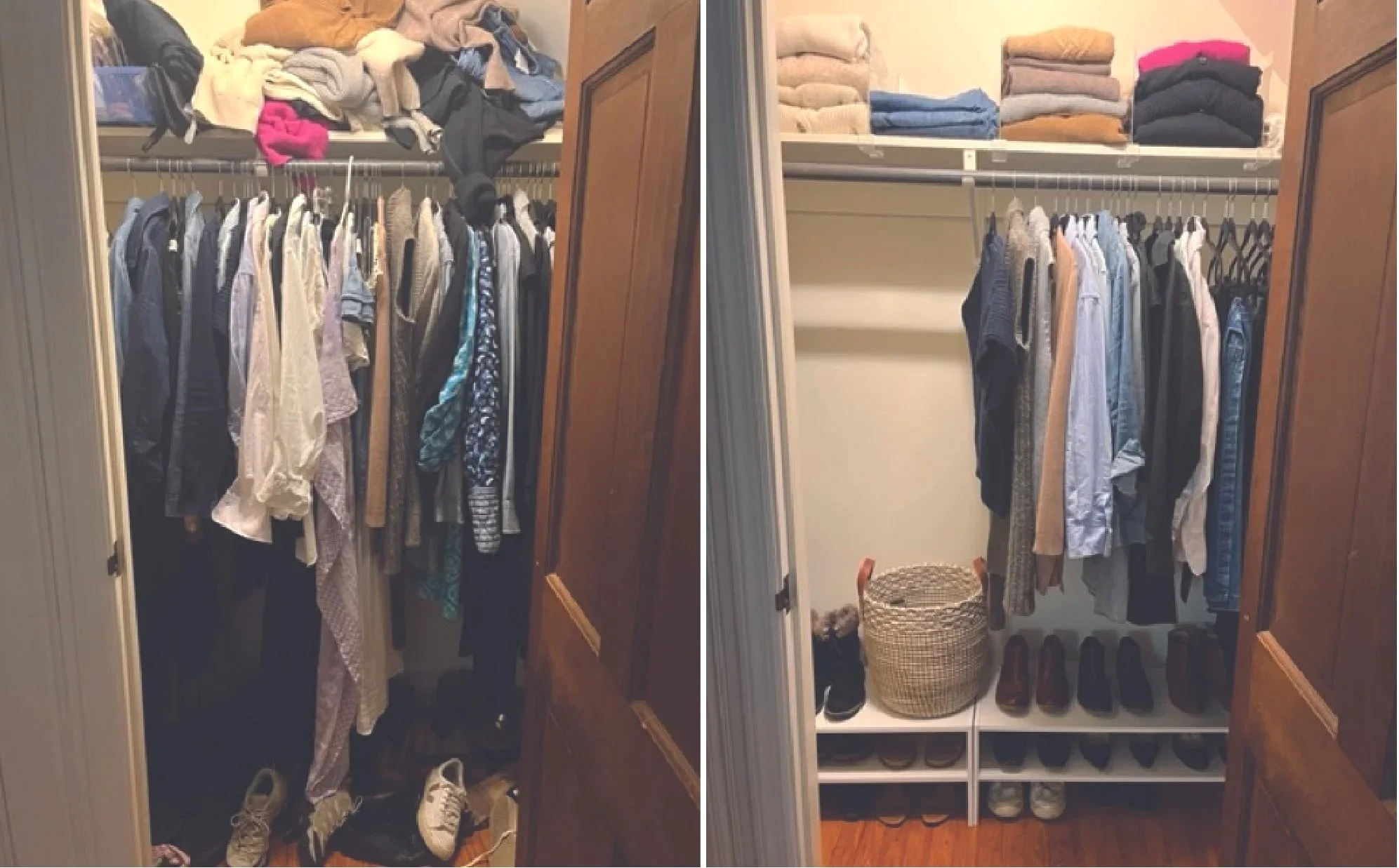
For this recent closet reset, we started with one simple advantage: unified hangers. It’s a small detail that instantly creates visual calm and cohesion.
From there, everything came out. Yes—everything.
Starting fresh allowed for a full reset. The closet was wiped down before moving into the edit: what stays, what goes, and what gets stored away for another season.
Then came function.
Shoes were lifted off the floor and given a proper home on low shelving. Because let’s be honest—no matter how hard you try, shoes on the floor will eventually become a pile. It’s not a personal failure, it’s just what they do.
Up top, sweaters and denim were folded and supported with shelf dividers—truly a genius solution for keeping those stacks from slowly collapsing into chaos.
Clothing was then organized by category—sweaters, shirts, pants, dresses—making everything easier to find and even easier to put away.
We also intentionally left space for a small drawer unit to be added later for accessories and wardrobe “maintenance tools” (because those items deserve better than being tucked into random corners).
And the best part?
This entire reset took just a few hours.
By afternoon: a completely transformed closet.
Weeks later: still going strong.
Because when a system actually works, it doesn’t just look good—it lasts.
And perhaps most importantly…
it keeps the clothing crisis at bay.
If your closet is feeling more chaotic than calm, it may be time for a reset.
I offer personalized closet edits designed to simplify your space and make getting dressed each day feel easier.
Feel free to reach out to learn more about working together.
Spring is Coming…
…And So Is the Perfect Time to Declutter
Spring is coming…although if you live in the Philadelphia area, it may not feel like it after the other day when we got dumped on with a LOT of snow—20” where I live! (It sounds like it varied from county to county.) I assure you though…spring is coming.
With spring just around the corner—23 days to be exact from the time I write this—it’s natural to start thinking about that age-old saying: “spring cleaning.” Freshening up our spaces, and in my world, clearing out clutter. Sounds good in theory, right? But it can also feel overwhelming. Here are five simple ways to get started:
1. Start small
Pick one space — a desk, a closet, or even a single drawer. Tackling a small area first makes decluttering manageable and motivating.
2. Sort and simplify
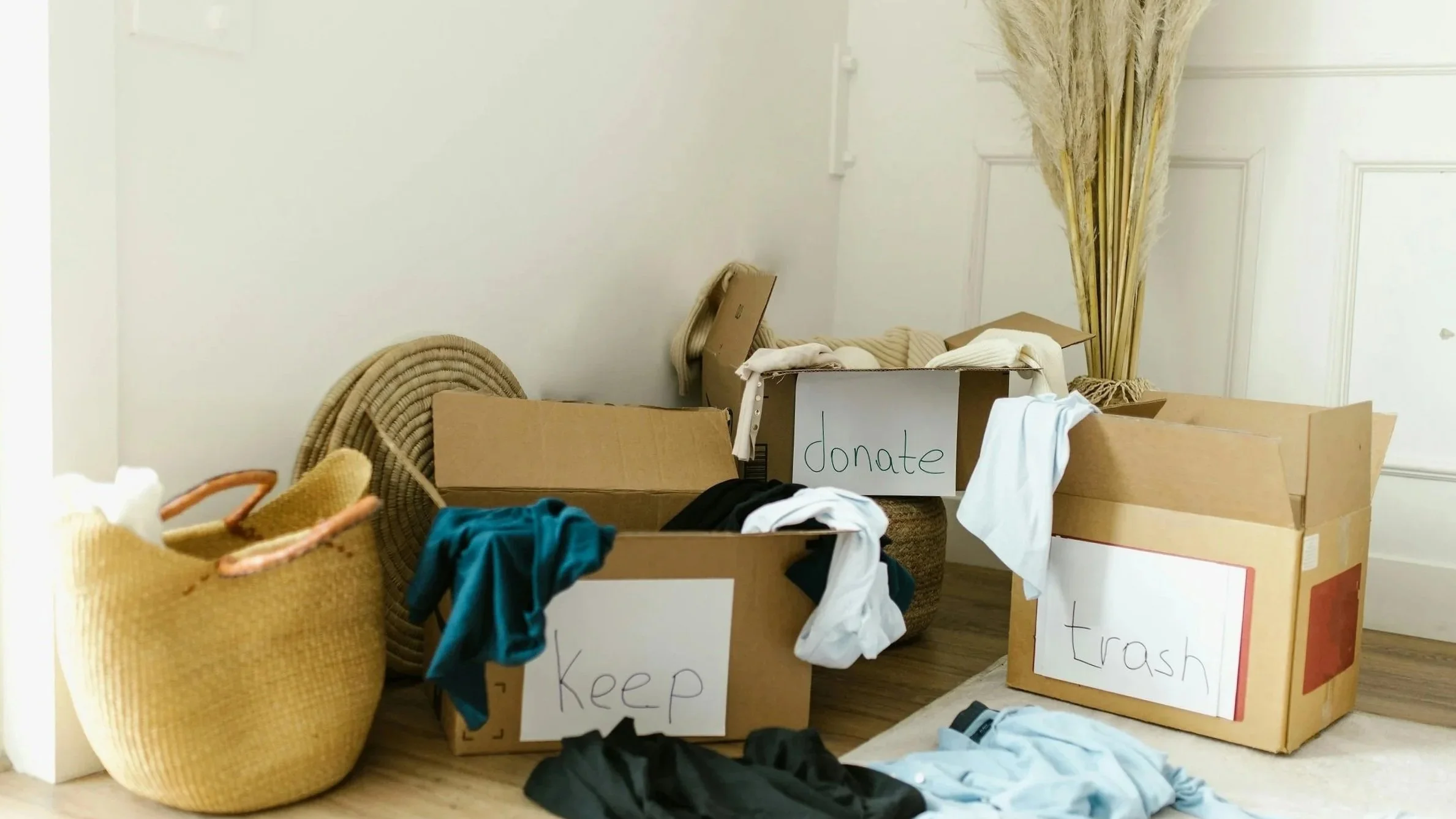
Create three piles:
Keep: Items you use and love
Donate: Items in good condition that could help someone else
Discard: Broken, expired, or unnecessary items
3. Digitize when possible
Scan photos, documents, or notes to reduce physical clutter while preserving memories and important info.
4. Smart storage
Containers, baskets, or multifunctional furniture can maximize your space and keep things organized. Label boxes or bins to make items easy to find. Repurpose what you can first—it’s sustainable and satisfying!
5. Ask for help
Sometimes a fresh set of eyes is all you need. Friends, family, or a professional organizer can offer guidance and speed up the process.
Decluttering doesn’t have to be overwhelming. With a few intentional steps, you can simplify your space, reduce stress, and create a home that feels calm, functional, and ready for the new season.
Feeling inspired but not sure where to start? Schedule a complimentary 20-minute consultation with The Well Nest Home to discuss your space, your goals, and your next steps.